


25 Mar RE!NSTITUTE: Reimagining Justice Systems in Latin America
Overview
From 2017 to 2024, Echo Collins-Egan worked with RE!NSTITUTE (formerly Rapid Results Institute), where she founded and led the organization’s Latin America justice work. She introduced the 100-Day Challenge methodology to the region’s criminal justice systems, mobilising over $4.7 million USD for the Latin America portfolio, and designed programming across three countries. Echo later became RE!NSTITUTE’s Chief Impact Officer from 2021 to 2024.
This case study documents the work accomplished during her tenure at RE!NSTITUTE, which continues to implement 100-Day Challenges around the world. For more information about the organisation’s work: re-institute.org
Pepe Chanona was also a key part of this work – that is what brought us together!
The Challenge: Latin American justice systems face endemic impunity, with struggling institutions unable to serve victims or deliver fair outcomes. Skeptics claimed “this [methodology] won’t work here” — that Mexico’s criminal justice system was too different, too broken, too entrenched to change.
SERVICES
Systems Change, Innovation, Strategy, Facilitation, Program Design, Fundraising, Technical Expertise and Training
SECTORS
Justice, Gender
2017-2024
Scale and Impact
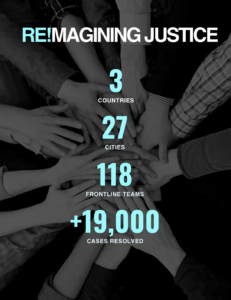
- 118 frontline teams across Mexico, Dominican Republic, and Honduras
- 19,000+ cases resolved
- 11,000+ victims received support and protection orders
- $40 million MXN+ in reparations recovered
- 67.5% of innovations sustained after program completion
- Work implemented in 27 communities across 3 countries
The Approach
The work adapted the 100-Day Challenge methodology for Latin American justice contexts, using a people-powered approach that:
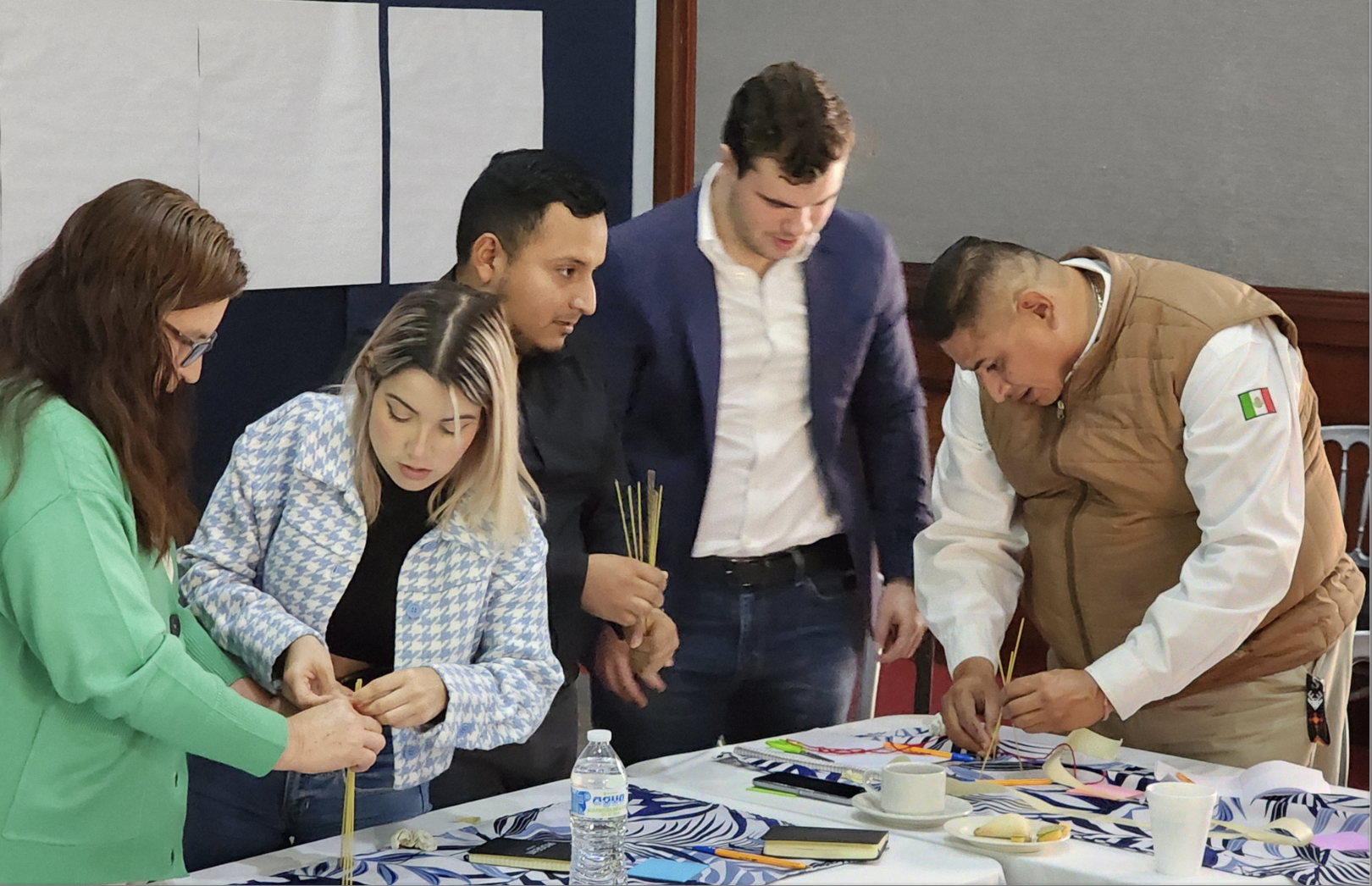
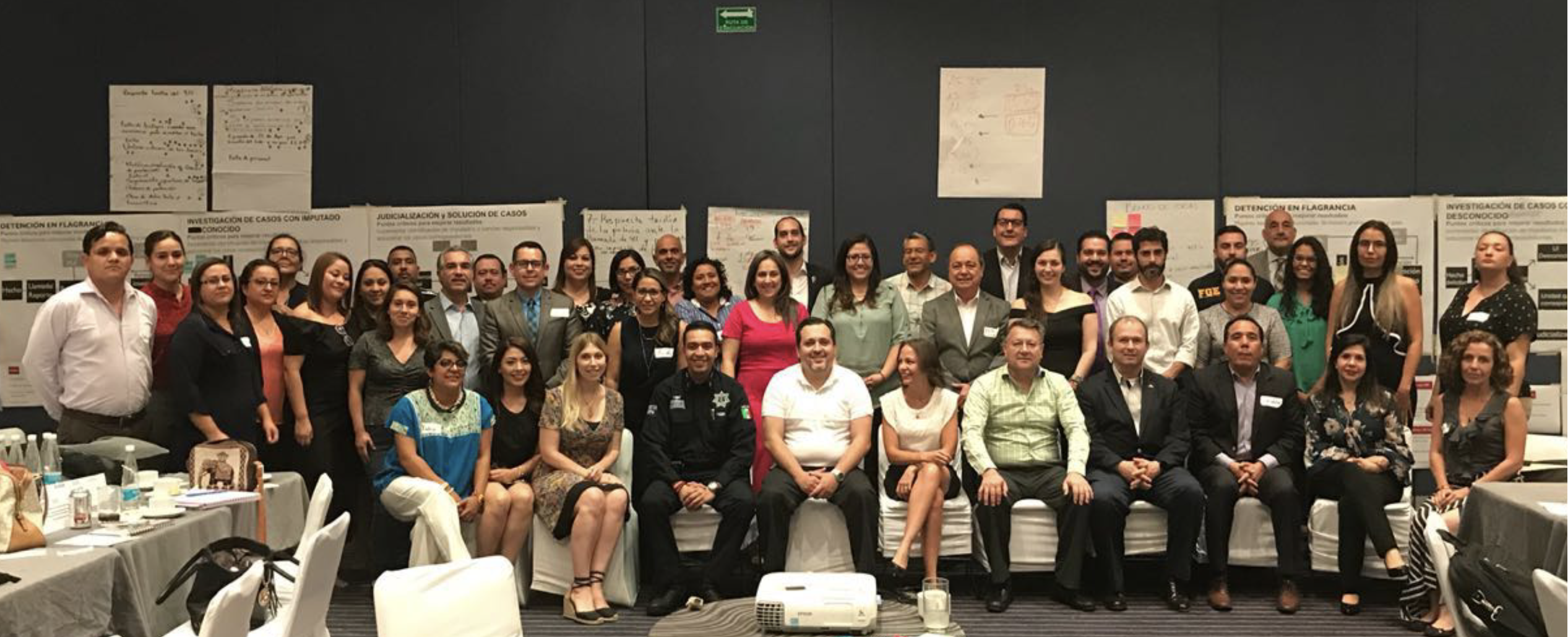
Brought frontline workers together — Judges, police officers, prosecutors, public defenders, and civil society representatives collaborated to solve shared challenges.
Focused on tangible results — Teams worked toward measurable outcomes in 100 days.
Centered on victims’ needs — Innovations were tested against their impact on those seeking justice.
Created space for local innovation — Frontline teams had permission to experiment with new solutions.
Results Across Three Areas
Criminal Justice System Transformation
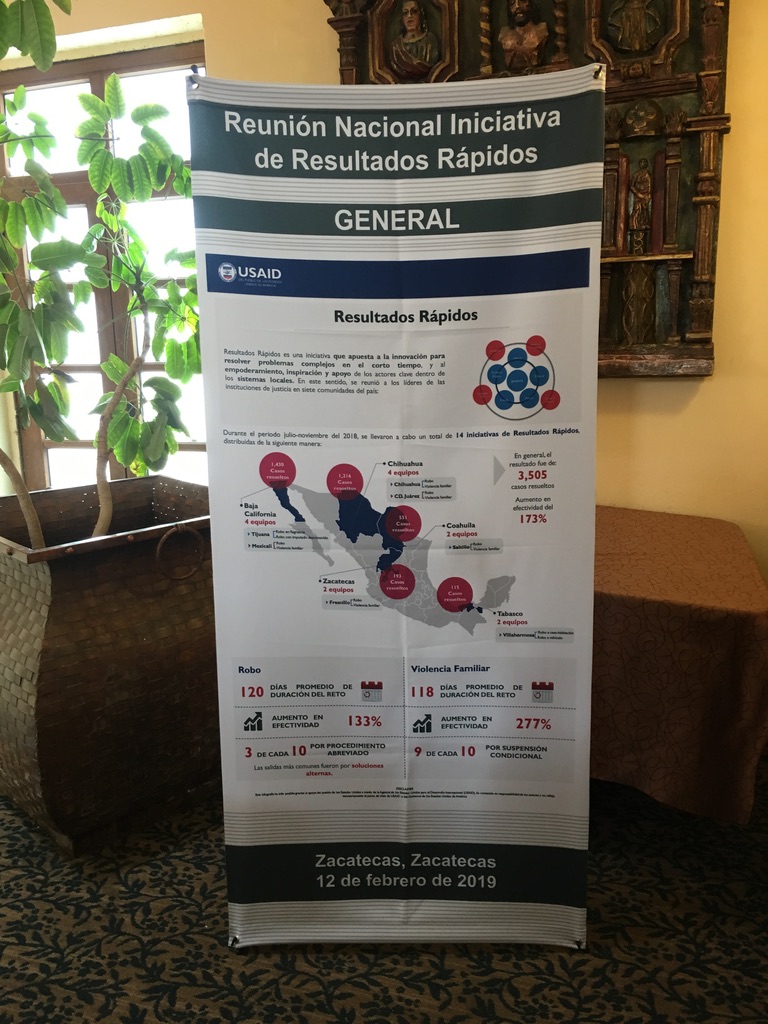
In 2017, RE!NSTITUTE applied the 100-Day Challenge methodology to criminal justice for the first time, working with USAID’s Projust program. Initial pilots launched in three Mexican cities.
Results from early implementation:
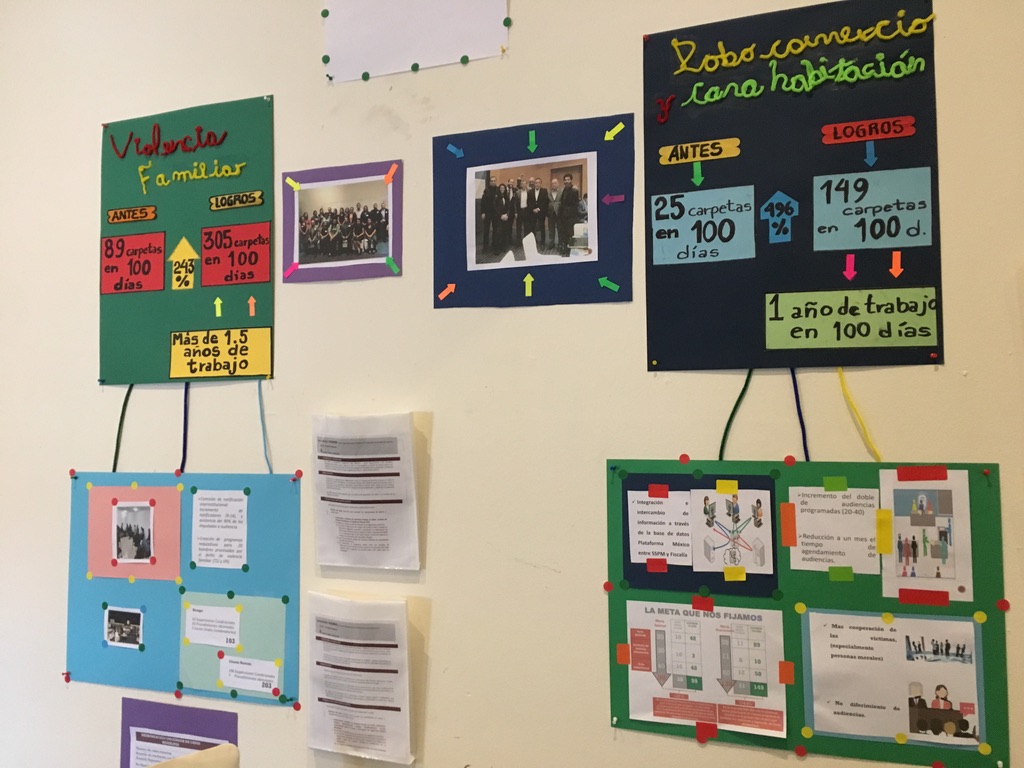
- Zacatecas: 756% increase in domestic violence case resolution; reduced average case processing time by 50%
- Ciudad Juárez: 193% increase in domestic violence cases resolved
- Villahermosa, Tabasco: First ever resolution of cases with unidentified suspects through inter-institutional collaboration
- Dominican Republic: 11x increase in gender violence case resolution; 7x increase in aggravated robbery cases resolved
By 2019, the approach evolved to emphasize not just case numbers but quality outcomes and victim-centered processes.
Gender-Based Violence
A major focus of the work was addressing gender-based violence through specialized programs.
Scale:
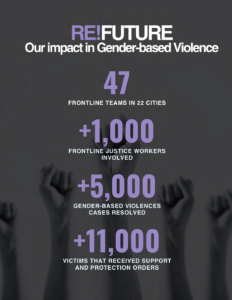
- 47 teams across 22 cities
- 5,000+ gender-based violence cases resolved
- 11,000+ victims received support and protection orders
Key innovations that emerged:
Ruta Heni (Hidalgo): During COVID-19, teams developed a WhatsApp-based crime reporting system, integrated hospitals into victim support networks, and created partnerships between police and civil society. Result: 299% increase in case resolution during the pandemic.
Orange Alert System (Nayarit): A 911 protocol to identify high-risk victims in real-time, reducing police response time by 90% in some cities.
Masculinity Workshops: Court-mandated programs for male defendants as an alternative to incarceration, achieving 0% recidivism rates during implementation in Fresnillo, Zacatecas.
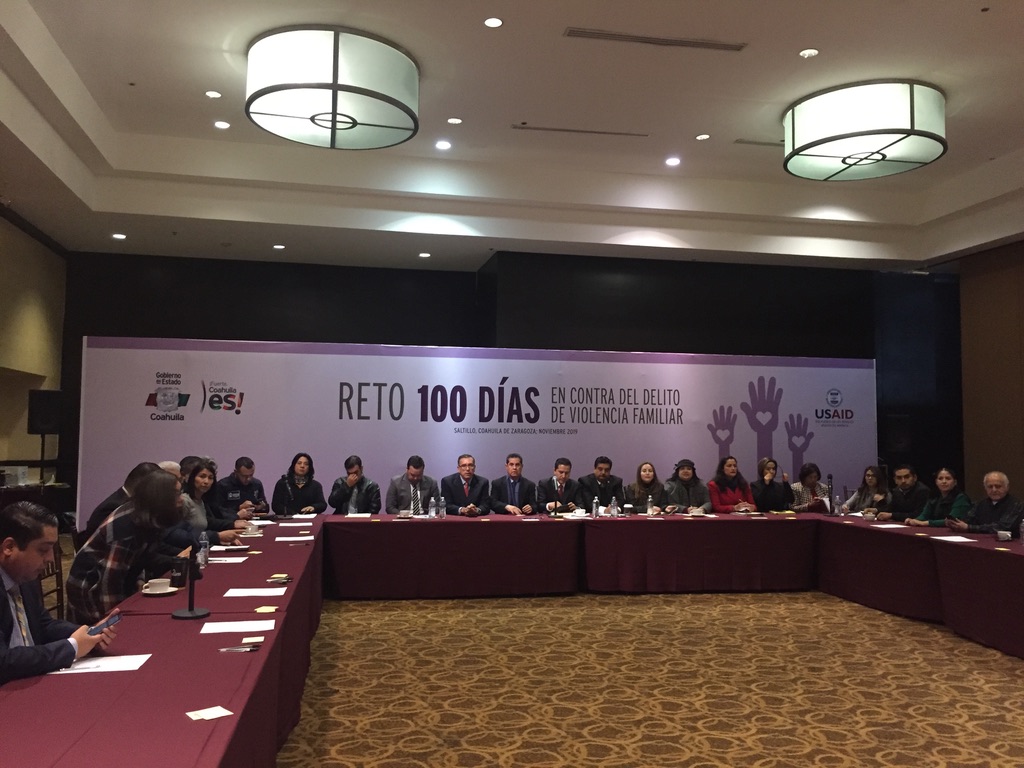
VAR Protocol (Coahuila): A risk assessment tool to identify women at highest risk of femicide, later scaled to six additional municipalities. Continues to be operational to this day (6 years later).
Anti-Corruption
From 2019-2021, RE!NSTITUTE implemented anti-corruption programs through USAID’s Transparency Rapid Response Project (TRRP) across six Mexican states.
Results:
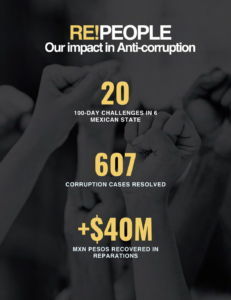
- 20 100-Day Challenges in 6 states
- 607 corruption cases resolved
- $40M+ recovered in reparations
Notable outcomes:
Sonora: First administrative corruption sentence for a public servant, which sparked broader cultural shifts in accountability.
Jalisco: Charges brought in high-profile cases including Trailers de la Muerte and State Pension Services corruption through unprecedented collaboration across institutions.
Sustainability
Post-program evaluation showed:
- 67.5% of innovations sustained after program completion
- 55% of participants continued refining existing innovations
- 100% of participants said they would participate again
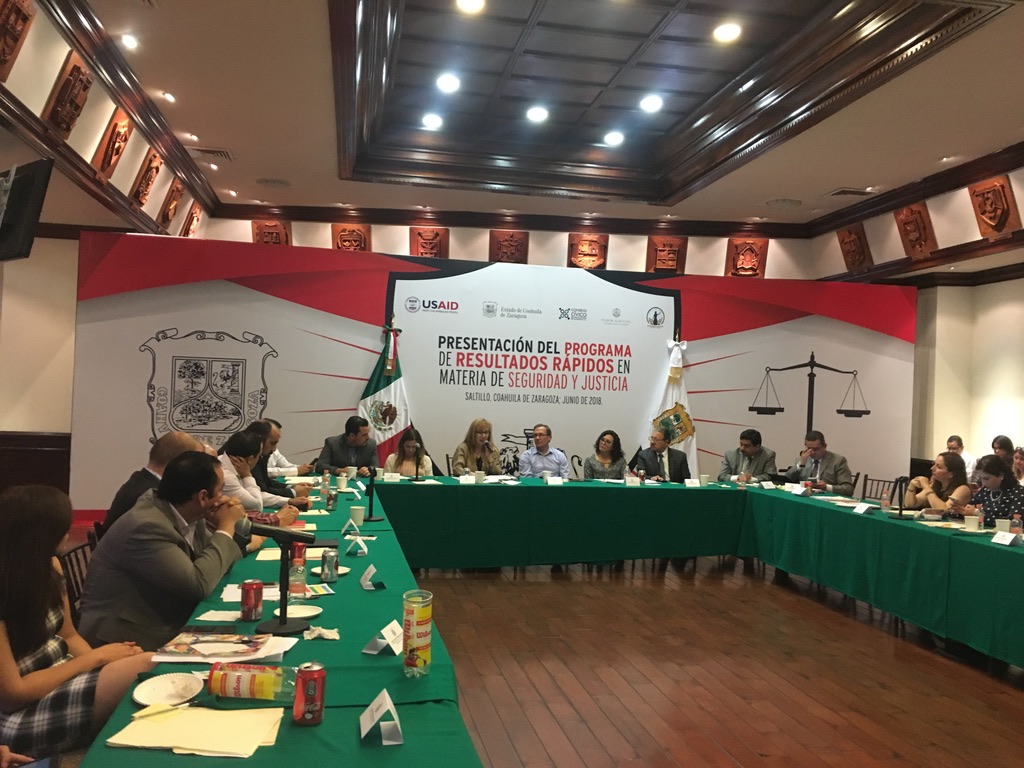
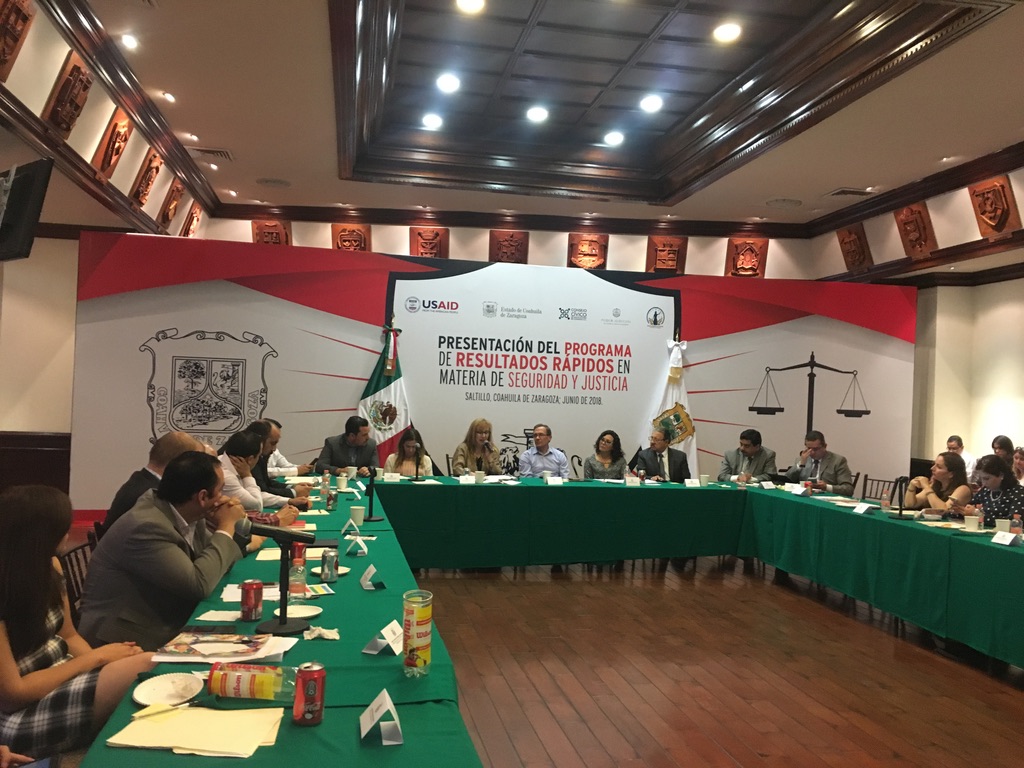
In Saltillo, the inter-institutional leadership group that began in 2018 continues to meet every Friday, six years later.
Why changes lasted:
- Innovations produced results, so people continued using them
- New collaborative relationships proved valuable
- Frontline workers had been empowered to experiment
- Leadership understood and supported the changes
Key Lessons
People-powered approaches work. Frontline workers hold knowledge essential for transforming systems.
Short-term results enable long-term change. Tangible wins in 100 days build momentum for longer transformation. They help people believe change is possible.
Gender violence requires systemic responses. Addressing violence against women needs justice institutions, health systems, education, private sector, and civil society working together. This is true of most of our complex social challenges!
Leadership support is essential. Systems change work requires ownership, permissioning and a willingness to let go of control and trust in one’s team and the methodology, without this it doesn’t work.
Building political capital enables scaling. Much of this work was able to scale because the team built political capital through the achievement of tangible results. That connected other leaders and communities to the movement, built trust and created a snowball effect that saw the work scale from 3 cities to over 20 in 5 years.
Just sitting diverse actors at the same table is powerful. It should be obvious that a judge, a policeman, a psychologist and a prosecutor should collaborate to achieve change together but no matter where we went with this methodology, that had never happened before and it was a crucial part of the effort’s success.
Funding
USAID
PROJUSTICIA, Justice Access for Victims and the Accused (JAVA), ConJusticia, Transparency Rapid Response Project (TRRP)
World Bank
Government of Quintana Roo
Partners
- MSI Tetra Tech
- DAI
- Fortis Consultoría
- Dexis Consulting
- Instituto Tecnológico de Santo Domingo (INTEC)
RE!NSTITUTE
This work was delivered under RE!NSTITUTE by:
Adrián Sánchez Olaiz
Corina Stanton Durán
David Blanc
Echo Collins-Egan
José Alberto Hernández Chanona
José Javier Cárdenas Cortés
Mariana Rios Palafox
Rebeca Fernández Callejas
Gallery:
Gallery:
Gallery:
Gallery:
Gallery:
Gallery:
Gallery:

Gallery:
Let’s start a conversation.
Ready to work?


Ciudad de México
+52 55 22 32 47 58
Astronomos 19
11800 Ciudad de México
Londres
+44 20 7123 4567
One Prince of Whales Road
London NW53LW
Contact: info@astronomos.studio
Gallery:
Gallery:
Gallery:
Gallery:
Gallery:
Gallery:
Gallery:
Let’s start a conversation.
Ready to work?
Ciudad de México
+52 55 22 32 47 58
Astronomos 19
11800 Ciudad de México
Londres
+44 20 7123 4567
One Prince of Whales Road
London NW53LW
Contact: info@astronomos.studio
Gallery:
Gallery:
Gallery:
Gallery:
Gallery:
Gallery:
Let’s start a conversation.
Ready to work?
Ciudad de México
+52 55 22 32 47 58
Astronomos 19
11800 Ciudad de México
Londres
+44 20 7123 4567
One Prince of Whales Road
London NW53LW
Contact: info@astronomos.studio
Gallery:
Gallery:
Gallery:
Gallery:
Gallery:
Let’s start a conversation.
Ready to work?
Ciudad de México
+52 55 22 32 47 58
Astronomos 19
11800 Ciudad de México
Londres
+44 20 7123 4567
One Prince of Whales Road
London NW53LW
Contact: info@astronomos.studio
Gallery:
Gallery:
Gallery:
Gallery:
Let’s start a conversation.
Ready to work?
Ciudad de México
+52 55 22 32 47 58
Astronomos 19
11800 Ciudad de México
Londres
+44 20 7123 4567
One Prince of Whales Road
London NW53LW
Contact: info@astronomos.studio
Gallery:
Gallery:
Gallery:
Gallery:
Gallery:
Gallery:
Let’s start a conversation.
Ready to work?
Ciudad de México
+52 55 22 32 47 58
Astronomos 19
11800 Ciudad de México
Londres
+44 20 7123 4567
One Prince of Whales Road
London NW53LW
Contact: info@astronomos.studio